Mantis Visual Processing: Predatory Computation of Stereo Vision

Aug 21, 2025 By

In the intricate dance of predator and prey, few hunters match the precision of the praying mantis. These seemingly placid insects, often mistaken for serene vegetarians, are in fact formidable predators equipped with one of the most sophisticated visual processing systems in the invertebrate world. Their success hinges not on brute force or overwhelming speed, but on a breathtakingly accurate calculation of distance—a real-time, three-dimensional assessment of their world that guides their iconic, lightning-fast strikes. This capability, known as stereopsis or stereoscopic vision, transforms their two-dimensional visual inputs into a rich depth map, allowing them to pinpoint the exact location of unsuspecting prey with unerring accuracy.

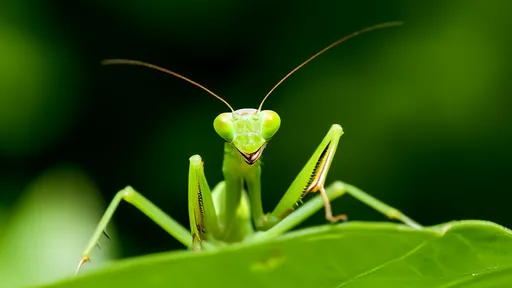
For decades, the mantis has been a subject of fascination not just for entomologists but for neuroscientists and engineers alike. The fundamental question is how an animal with a brain the size of a grain of rice performs complex computations that challenge even our most advanced computers. Unlike humans and other primates, whose forward-facing eyes provide overlapping fields of view essential for depth perception, the mantis possesses a vastly different ocular architecture. Its two large, bulbous compound eyes are positioned on the sides of its triangular head, offering an almost 360-degree view of its surroundings. This panoramic vision is excellent for detecting motion from any direction, a crucial early-warning system against its own predators. However, the critical region for depth perception is a narrow band where the visual fields of these two eyes overlap directly in front of the insect. It is within this small window of binocular overlap that the magic of stereoscopic vision occurs.

The underlying mechanism is a neurological process of breathtaking elegance. Each compound eye captures a slightly different two-dimensional image of the world. These two separate images are transmitted via the optic nerve to the central nervous system. Here, specialized neurons act as correlation detectors. Their sole function is to identify specific features—like a dark spot representing a fly’s wing—in the image from the left eye and then hunt for that same feature in the image arriving milliseconds later from the right eye. The computational genius lies in measuring the disparity or the positional difference of that feature between the two images. A large disparity indicates the object is close; a small disparity means it is farther away. The brain effectively triangulates the distance to the target based on this retinal shift, creating an instantaneous and precise depth map.

This biological system is a masterclass in efficiency. The mantis brain does not process the entire scene in high resolution. Instead, it likely focuses its stereoscopic calculations on areas of high contrast or movement—the tell-tale signs of potential prey. This selective processing conserves immense amounts of neural energy, allowing for a rapid response without cognitive overload. Research involving mantises wearing tiny 3D glasses has spectacularly confirmed this. Scientists can project moving stimuli onto screens, and the insects will strike at virtual prey only when the images presented to each eye contain the correct binocular disparity for depth. This proves that their strikes are not simple reflexes triggered by motion but are deliberate actions guided by a computed perception of three-dimensional space.

The implications of understanding the mantis's visual system extend far beyond basic biology. In the field of robotics and computer vision, engineers face a constant challenge: enabling machines to perceive depth quickly, accurately, and without consuming vast computational power. Current methods like LiDAR or complex stereo camera setups are effective but often energy-intensive and computationally expensive. The mantis offers a blueprint for a different approach—a lean, efficient algorithm that focuses on specific, relevant cues rather than processing an entire environment. By reverse-engineering the neural circuitry of the mantis, researchers aim to develop new algorithms for depth perception in robots, drones, and even autonomous vehicles. These systems could navigate cluttered environments by identifying key obstacles and calculating distances with the efficiency of an insect, a revolutionary step forward in machine autonomy.

Furthermore, the study of mantis stereopsis provides profound insights into the evolution of vision itself. It demonstrates that advanced stereoscopic vision is not the exclusive domain of large-brained mammals. It evolved independently in the insect lineage, a stunning example of convergent evolution where entirely different neural architectures arrive at the same sophisticated solution to a universal problem: judging distance. This suggests that the computational principles of depth perception may be a fundamental and highly efficient strategy that can be implemented by even the most minimal of neural hardware. Understanding these ancient and optimized algorithms helps scientists piece together the evolutionary pressures that shaped perception and could reveal core principles of neural computation applicable across the animal kingdom.

In the end, the praying mantis is far more than a garden curiosity; it is a living testament to the power of evolutionary innovation. Its ability to calculate the world in three dimensions with a microscopic brain is a humbling reminder that complexity does not always require size. Every precise, successful strike is the result of millions of years of refinement—a perfect synergy of optics, neurology, and physics. As we continue to decode its secrets, we are not only learning about an insect; we are uncovering fundamental principles of perception that inspire new technologies and deepen our appreciation for the elegant solutions engineered by nature.
Recommend Posts
Animal

Arctic Fox Fur Color Change: Seasonal Adaptation through Gene Regulation

By /Aug 21, 2025

In the vast, unforgiving expanse of the Arctic tundra, a small canid performs one of nature's most elegant costume changes. The Arctic fox, Vulpes lagopus, is a master of disguise, its fur shifting from a thick, snowy white in the bitter winter months to a thinner, earthy brown or grey for the summer. This transformation is not a simple response to falling snow or melting ice; it is a profound, genetically orchestrated adaptation, a precise dance of molecular biology that ensures the animal's survival in one of the planet's most extreme environments. For centuries, observers marveled at this change, attributing it to direct environmental cues. Modern science, however, has peeled back the layers to reveal a complex system of genetic regulation, a biological clock synchronized to the changing light of the polar seasons, dictating the precise timing of this vital camouflage.
Animal

Snowy Owl Auditory System: Acoustic Localization of Arctic Hunters

By /Aug 21, 2025

In the silent, snow-blanketed expanses of the Arctic, the Snowy Owl reigns as a master hunter, its prowess honed by one of nature's most sophisticated auditory systems. Unlike many predators that rely primarily on vision, the Snowy Owl has evolved an extraordinary ability to pinpoint prey through sound alone, a critical adaptation for survival in an environment where daylight is scarce for much of the year and prey often moves beneath the snow. This acoustic precision transforms the owl into an efficient and deadly snowbound sentinel, capable of detecting and striking with remarkable accuracy even in complete darkness or through layers of snow.
Animal

Muskox Herd Defense System: Tactical Coordination in Group Defense

By /Aug 21, 2025

In the vast, windswept tundras of the Arctic, the musk ox stands as a testament to resilience and collective strength. These shaggy, prehistoric-looking creatures have perfected a defense mechanism so effective it has allowed them to survive for millennia in one of the planet's most unforgiving environments. Their strategy is not one of individual flight or fight, but a deeply coordinated, collective action known as the phalanx or fortress defense. This is a story of tactical brilliance written in the snow, a symphony of instinct and cooperation that turns a vulnerable herd into an impenetrable fortress.
Animal

Polar Bear Hunting Strategies: Behavioral Adaptations in the Tundra Environment

By /Aug 21, 2025

The vast white expanse of the Arctic is a realm of extreme conditions, a place where survival is a constant and brutal negotiation with the elements. At the apex of this frozen world stands a master of adaptation, an icon of resilience: the polar bear. Its entire existence, from its immense physical power to its intricate behaviors, is a testament to a singular evolutionary purpose—hunting. The polar bear is not merely a resident of the ice; it is a sophisticated predator whose hunting strategies are perfectly, and precariously, tuned to the dynamics of its frozen seascape.
Animal

Mechanical Optimization of Beetle Exoskeleton: Biomimetic Materials

By /Aug 21, 2025

In the dense undergrowth of a tropical rainforest, a rhinoceros beetle lifts an object 850 times its own weight—a feat equivalent to a human hoisting two fully loaded semi-trucks. This staggering display of strength is not powered by bulging muscles but by an evolutionary masterpiece: the exoskeleton. For centuries, the armored shells of beetles have been casually dismissed as nature’s plate mail, mere protective casings. But to materials scientists and engineers, they represent one of the most sophisticated and optimized structural materials on the planet. The study of the beetle exoskeleton has evolved from biological curiosity to a frontier of interdisciplinary research, where zoology meets cutting-edge materials science, promising to revolutionize how we design everything from aircraft to body armor.
Animal

Penguin Circulation: Physiological Breakthrough in Antifreeze Mechanism

By /Aug 21, 2025

In the frigid waters of the Antarctic, where temperatures plunge below freezing, survival seems an impossible feat for most creatures. Yet, the emperor penguin not only endures but thrives in this harsh environment. For decades, scientists have been captivated by one particular question: how do these birds prevent their blood from freezing? Recent physiological breakthroughs have begun to unravel the sophisticated anti-freeze mechanisms embedded within the penguin’s circulatory system, revealing a marvel of evolutionary adaptation.
Animal

Butterfly Migration Mechanism: Tiny Creatures' Cross-Continental Navigation

By /Aug 21, 2025

Each year, as seasons shift and temperatures begin to drop, an extraordinary phenomenon unfolds across continents. Billions of delicate wings take to the skies, embarking on journeys that span thousands of miles. The monarch butterflies of North America, the painted ladies of Europe, and the bogong moths of Australia—all partake in migrations that defy their fragile appearances. These tiny travelers, weighing less than a gram, navigate with precision across vast and unfamiliar landscapes, often arriving at destinations they have never seen. How do these minuscule creatures accomplish such formidable feats of navigation? The answer lies in a sophisticated interplay of innate biological mechanisms and environmental cues, a symphony of guidance systems that scientists are only beginning to fully understand.
Animal

Mantis Visual Processing: Predatory Computation of Stereo Vision

By /Aug 21, 2025

In the intricate dance of predator and prey, few hunters match the precision of the praying mantis. These seemingly placid insects, often mistaken for serene vegetarians, are in fact formidable predators equipped with one of the most sophisticated visual processing systems in the invertebrate world. Their success hinges not on brute force or overwhelming speed, but on a breathtakingly accurate calculation of distance—a real-time, three-dimensional assessment of their world that guides their iconic, lightning-fast strikes. This capability, known as stereopsis or stereoscopic vision, transforms their two-dimensional visual inputs into a rich depth map, allowing them to pinpoint the exact location of unsuspecting prey with unerring accuracy.
Animal

Ant Pheromones: The Syntactic Structure of Chemical Language

By /Aug 21, 2025

In the intricate world of ants, communication transcends the limitations of sound and sight, weaving a complex tapestry of chemical signals that guide every aspect of their societal functions. This silent language, composed of pheromones, serves as the backbone of their highly organized colonies, dictating behaviors from foraging to defense, and even the intricate care of their young. The study of these chemical signals reveals a sophisticated syntax, a grammar of scents that orchestrates the life of the colony with precision and efficiency.
Animal

Mathematical Modeling of Swarm Decision Making in Bees

By /Aug 21, 2025

In the intricate world of honeybee colonies, one of nature's most fascinating phenomena unfolds each spring: the democratic decision-making process of swarm selection. When a hive becomes overcrowded, the queen and a portion of workers depart to establish a new home, leaving behind a successor. The fate of the swarm hinges on a collective choice made not by a single leader, but through a sophisticated process of debate and consensus-building that has captivated scientists for decades.
Animal

Nest Construction Material Science: The Engineering Application of Natural Materials

By /Aug 21, 2025

In the evolving landscape of materials science, the study of structural biomaterials has emerged as a pivotal field, bridging the gap between biological systems and engineering innovation. This discipline, often referred to as structural biomaterials science, delves into the intricate architectures and properties of natural materials, seeking to harness their unique characteristics for advanced technological applications. From the resilient silk of spiders to the robust nacre of abalone shells, nature offers a treasure trove of inspiration, demonstrating solutions to complex engineering challenges that have been refined over millions of years of evolution.
Animal

Optical Design for High-Precision Tracking in Raptor Visual Systems

By /Aug 21, 2025

In the vast expanse of the natural world, few biological systems rival the precision and sophistication of raptor vision. These apex predators, including eagles, hawks, and falcons, possess visual capabilities that have been honed over millions of years of evolution, enabling them to detect, track, and capture prey with astonishing accuracy from incredible distances. The optical design underlying their high-precision tracking is a marvel of biological engineering, offering profound insights not only into avian physiology but also into potential applications in human technology, from advanced imaging systems to autonomous tracking devices.
Animal

Geomagnetic Induction Mechanism: The Application of Quantum Biology in Navigation

By /Aug 21, 2025

For decades, the mystery of how certain species navigate across vast and featureless landscapes has captivated scientists and laypeople alike. From the arctic tern’s pole-to-pole migration to the humble homing pigeon’s unerring return to its loft, these feats of biological navigation defy simple explanation. While behaviors like sun compass orientation and star navigation account for some of this ability, they fail to explain precise navigation on overcast days or in the absence of visual cues. The answer, it seems, may lie not in the macro world we perceive, but in the bizarre and counterintuitive realm of the quantum. A growing body of evidence suggests that a delicate, quantum-mechanical process—magnetoreception—is the secret behind nature’s most impressive navigators.
Animal

The Song Learning Process: Cultural Inheritance of Bird Dialects"

By /Aug 21, 2025

In the dense forests of Central America, a young songbird hesitantly mimics the melody of its father. Across continents in an Australian eucalyptus grove, a fledgling parrot practices the distinct contact calls of its flock. These are not mere repetitions but the foundations of cultural transmission—the phenomenon of avian dialects passing through generations like stories around a campfire.
Animal

Aesthetic Revolution Driven by Sexual Selection: The Evolution of Courtship Displays

By /Aug 21, 2025

In the grand theater of evolution, few forces have sculpted life’s diversity with such flamboyant precision as sexual selection. While natural selection favors traits that enhance survival—the sharpest claws, the swiftest legs—sexual selection operates on an entirely different principle: the often extravagant, sometimes bewildering, and always fascinating aesthetics of attraction. This is the engine behind what can only be described as an aesthetic revolution in the natural world, a process driven not by the harsh logic of survival, but by the nuanced and powerful preferences of choosy mates.
Animal

Octopus Neural Network: Control Mechanisms of Distributed Intelligence"

By /Aug 21, 2025

The ocean depths hold mysteries that continue to baffle and inspire terrestrial scientists. Among its most enigmatic inhabitants is the octopus, a creature whose intelligence seems almost alien, distributed not in a single brain but across a complex, embodied network. This decentralized neural architecture challenges our very understanding of cognition and control, offering a radical blueprint for alternative forms of intelligence. Researchers are now delving into the intricacies of the octopus nervous system, not merely as a biological curiosity, but as a profound model for next-generation distributed computing and autonomous systems. The implications stretch far beyond marine biology, potentially revolutionizing fields from robotics to artificial intelligence.
Animal

Cognitive Foundation of Complex Relationships in Dolphin Society

By /Aug 21, 2025

In the vast expanse of the ocean, where sunlight fades into profound blue, dolphins navigate a world as socially intricate as our own. Their societies, built upon layers of relationships, communication, and cultural transmission, offer a fascinating glimpse into the cognitive foundations of complex social structures. For decades, researchers have been captivated by the sophistication of dolphin interactions, which rival those of primates and even humans in certain aspects. This deep dive into the social architecture of dolphins reveals not just the mechanics of their societies but the profound intelligence that underpins them.
Animal

Whale Fall Succession: Sustainable Development of Deep-Sea Oases

By /Aug 21, 2025

In the crushing darkness of the deep sea, where nutrients are scarce and life is a constant struggle, one of nature's most profound and paradoxical cycles unfolds. It begins not with a birth, but with a death. The descent of a whale carcass—a phenomenon poetically termed a 'whale fall'—creates a sudden, concentrated oasis of organic matter on the barren seabed. This event triggers a complex, decades-long ecological succession, transforming a site of death into a thriving hub of biodiversity and a remarkable case study in deep-sea sustainability.
Animal

Bioluminescence in Deep-Sea Creatures: Evolutionary Advantages of Chemical Illumination

By /Aug 21, 2025

In the crushing darkness of the deep sea, where sunlight is a forgotten memory, a silent, spectacular light show perpetually unfolds. This is the realm of bioluminescence, a form of chemiluminescence where living organisms produce their own light through intricate chemical reactions. For the bizarre and often terrifying creatures that inhabit these depths, this biological innovation is not merely a curiosity; it is a fundamental tool for survival, a language, and a weapon, honed over millions of years of evolution in the planet's most extreme environment.
Animal

Coral Symbiotic System: The Ecological Modulation of Microbiome

By /Aug 21, 2025

Beneath the sun-dappled waves of our planet’s oceans lies one of nature’s most intricate and vital partnerships: the coral holobiont. This complex symbiotic system, composed of the coral animal, photosynthetic dinoflagellates, and a diverse array of bacteria, archaea, fungi, and viruses, functions as a cohesive meta-organism. For decades, scientific inquiry has rightly focused on the relationship between corals and their algal symbionts, Zooxanthellae, which provide up to 90% of the host’s energy requirements through photosynthesis. However, a silent, microscopic workforce operating within and upon the coral has long been overlooked. The coral microbiome, a dynamic consortium of microorganisms, is now emerging from the shadows of its more famous partners, recognized not as mere passengers but as fundamental architects of coral health, resilience, and ultimately, the survival of entire reef ecosystems.