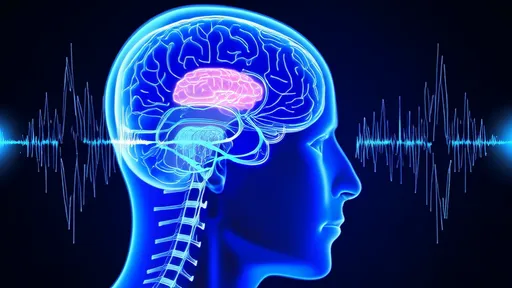
In a groundbreaking development in neuroscience, researchers have demonstrated the potential of focused ultrasound to non-invasively modulate deep brain structures, particularly the hippocampus, to enhance memory encoding. This innovative approach could revolutionize treatments for memory-related disorders such as Alzheimer’s disease and other forms of dementia, offering hope where pharmaceutical interventions have fallen short.
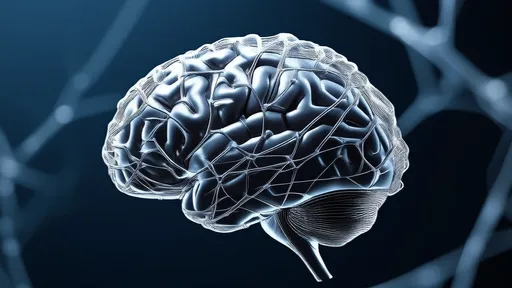
The hippocampus, a seahorse-shaped region deep within the brain, plays a pivotal role in forming and organizing memories. Traditionally, stimulating this area required invasive procedures like deep brain stimulation (DBS), which involves surgically implanted electrodes. However, the advent of transcranial focused ultrasound (tFUS) has opened new doors for precise, non-invasive neuromodulation. Unlike other non-invasive techniques such as transcranial magnetic stimulation (TMS), which lack the precision to target deep brain structures, tFUS can penetrate the skull and reach areas like the hippocampus with remarkable accuracy.
Recent studies have shown that low-intensity tFUS can selectively activate hippocampal neurons in animal models, leading to measurable improvements in memory tasks. For instance, researchers observed enhanced spatial memory in rodents following ultrasound stimulation, with corresponding increases in neural activity within the hippocampus. These findings suggest that tFUS could be harnessed to strengthen memory encoding in humans without the risks associated with surgery or the side effects of drugs.
The Science Behind Ultrasound Neuromodulation
Focused ultrasound works by delivering high-frequency sound waves to a specific brain region, creating mechanical pressure that influences neuronal activity. Unlike electrical or magnetic stimulation, ultrasound waves can be finely tuned to target millimeter-scale areas deep within the brain while sparing surrounding tissues. This precision is critical for modulating the hippocampus, which is nestled among other vital structures.
One of the most compelling aspects of tFUS is its ability to modulate neural circuits without causing tissue damage. Early concerns about ultrasound’s safety have been alleviated by studies showing that low-intensity pulses can reversibly alter neuronal firing rates without inducing heat or cavitation effects. This makes tFUS an attractive tool for both research and clinical applications, particularly for conditions where reversible modulation is desired.
From Lab to Clinic: Translational Potential
The transition from animal studies to human trials is already underway. Preliminary experiments in healthy volunteers have demonstrated that tFUS can influence hippocampal activity, as measured by functional MRI (fMRI) and EEG. Participants exposed to ultrasound stimulation showed improved performance in memory recall tasks, suggesting that the technique could have real-world applications.
For patients with Alzheimer’s disease or mild cognitive impairment, tFUS could offer a much-needed alternative to current therapies. Unlike drugs that often have systemic side effects, ultrasound can be directed precisely to the affected brain regions, minimizing unintended consequences. Moreover, the non-invasive nature of tFUS means it could be used as a preventive measure in at-risk populations, potentially delaying the onset of memory decline.
Challenges and Future Directions
Despite its promise, several hurdles remain before tFUS becomes a mainstream treatment. One major challenge is optimizing the ultrasound parameters—such as frequency, intensity, and duration—to achieve consistent and safe modulation across different individuals. Variability in skull thickness and brain anatomy also complicates the delivery of focused ultrasound, necessitating personalized approaches.
Another area of active research is understanding the long-term effects of repeated tFUS sessions. While short-term studies have shown no adverse effects, the implications of chronic stimulation are still unknown. Researchers are also exploring whether tFUS can be combined with other therapies, such as cognitive training or pharmacological treatments, to amplify its benefits.
Ethical and Societal Implications
As with any emerging neurotechnology, the use of tFUS raises ethical questions. The ability to enhance memory in healthy individuals could lead to misuse, such as in academic or competitive settings where cognitive performance is paramount. Regulatory frameworks will need to address these concerns while ensuring that the technology remains accessible to those who need it most.
Public perception will also play a crucial role in the adoption of tFUS. Unlike invasive brain implants, which may evoke fear or stigma, non-invasive techniques like ultrasound are likely to be more readily accepted. However, educating patients and clinicians about the benefits and limitations of tFUS will be essential to avoid unrealistic expectations.
A New Era in Brain Modulation
The potential of focused ultrasound to non-invasively activate the hippocampus marks a significant leap forward in neuromodulation. By bypassing the limitations of traditional methods, tFUS offers a safer, more precise way to intervene in memory-related disorders. As research progresses, this technology could transform not only how we treat neurological conditions but also how we understand the fundamental mechanisms of memory.
For now, the field is brimming with excitement. With each new study, scientists are uncovering the vast possibilities of ultrasound neuromodulation, bringing us closer to a future where memory enhancement is as simple as a brief, painless session of sound waves.

By /Aug 25, 2025

By /Aug 25, 2025

By /Aug 25, 2025

By /Aug 25, 2025

By /Aug 25, 2025

By /Aug 25, 2025
By /Aug 25, 2025
By /Aug 25, 2025

By /Aug 25, 2025

By /Aug 25, 2025

By /Aug 5, 2025
By /Aug 5, 2025
By /Aug 5, 2025

By /Aug 5, 2025

By /Aug 5, 2025

By /Aug 5, 2025

By /Aug 5, 2025
By /Aug 5, 2025

By /Aug 5, 2025
By /Aug 5, 2025