Decoding the Origin of Water Ice Isotope Composition in Lunar Permanently Shadowed Regions

Aug 25, 2025 By

In the profound silence of the Moon's polar regions, where sunlight never reaches, lies one of the most tantalizing mysteries of our celestial neighbor: water ice preserved in permanently shadowed craters. For decades, scientists have speculated about the origin and composition of this ice, a resource that could prove invaluable for future lunar exploration and even deeper space missions. Recent advances in drilling technology and isotopic analysis are now allowing researchers to probe these frozen reservoirs, decoding stories etched in hydrogen and oxygen that date back billions of years.

The discovery of water ice on the Moon, once thought to be a dry and desolate world, revolutionized our understanding of planetary formation and the distribution of volatiles in the inner solar system. Initial remote sensing data from orbiters like NASA's Lunar Reconnaissance Orbiter and India's Chandrayaan-1 provided compelling evidence for the presence of water ice, particularly in the permanently shadowed regions (PSRs) near the poles. These areas, with temperatures plunging below -200 degrees Celsius, act as natural deep-freezes, trapping water and other volatile compounds for eons.

However, detecting ice from orbit is one thing; understanding its precise origin and history is another. Where did this water come from? Was it delivered by comets and asteroids during the heavy bombardment phase early in the solar system's history? Could it have been formed through interactions between the solar wind and the lunar regolith? Or does it represent a mixture of sources, a palimpsest of cosmic events recorded in its molecular structure? To answer these questions, scientists have turned to a powerful tool: isotopic analysis.

Isotopes, variants of elements with different numbers of neutrons, serve as fingerprints for geological and astrophysical processes. The ratios of deuterium to hydrogen (D/H) and specific oxygen isotopes (like O-18 to O-16) in water ice can reveal its provenance. For instance, water originating from comets often has a higher D/H ratio compared to water from asteroids or that formed via solar wind implantation. By drilling into these icy deposits and analyzing their isotopic composition, researchers can begin to decode the complex history of water delivery to the Moon and, by extension, to Earth.

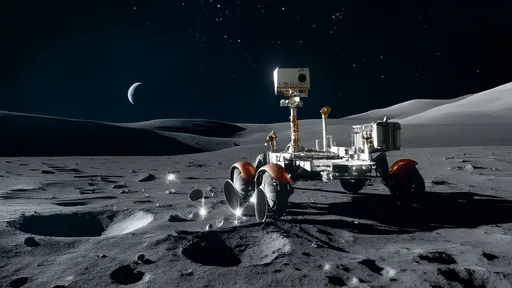
Drilling in the Moon's permanent shadows presents monumental engineering and logistical challenges. These regions are among the coldest places in the solar system, and operating machinery there requires robust systems immune to extreme cold and designed to function without solar power. Recent missions, such as conceptual studies for robotic drills and sample return capabilities, aim to overcome these hurdles. The goal is to extract pristine ice cores from depths of up to several meters, avoiding surface contamination and obtaining samples that have been shielded from solar radiation and micrometeorite gardening.

Once retrieved, these samples undergo meticulous laboratory analysis on Earth. Using mass spectrometry, scientists measure the minute differences in isotopic abundances with incredible precision. Early studies on lunar samples, including those from the Apollo missions that contained traces of water in volcanic glasses, provided a baseline. However, the ice from PSRs is expected to tell a much broader and more complex story, potentially containing water from multiple sources that accumulated over geological time scales.

Preliminary data from indirect measurements and analog studies suggest a heterogeneous mix. Some ice deposits show isotopic signatures reminiscent of carbonaceous chondrites, a type of water-rich asteroid, indicating asteroidal delivery. Other signals point to cometary origins, with higher D/H ratios aligning with known cometary values. Intriguingly, there is also evidence for a component matching the isotopic composition of the solar wind, supporting the theory that hydrogen ions from the Sun can bond with oxygen in the regolith to form water molecules.

This multiplicity of sources paints a dynamic picture of the lunar environment. The Moon has been a passive collector of material throughout its history, its polar cold traps acting as archives for impactors from across the solar system. Decoding the isotopic composition of its water ice is like reading a history book of cosmic deliveries, each chapter written by a different type of visitor. This not only illuminates the past but also has profound implications for the future.

Understanding the origin and distribution of lunar water is crucial for planning sustainable human presence on the Moon. If the ice is abundant and accessible, it can be mined for life support, drinking water, and oxygen for breathing. Moreover, by splitting water into hydrogen and oxygen, it can provide rocket propellant, turning the Moon into a fueling station for missions to Mars and beyond. The isotopic data will help assess the quality and usability of this resource; for instance, water with a very high D/H ratio might be less ideal for certain applications due to the properties of heavy water.

Beyond practical applications, this research delves into fundamental questions about our place in the universe. The water on the Moon is a mirror to the water on Earth. By comparing the isotopic fingerprints of lunar ice with those of terrestrial oceans and known extraterrestrial bodies, scientists can test theories about how water arrived on our own planet. Did Earth acquire its water primarily from asteroids, comets, or both? The lunar record, undisturbed by plate tectonics and weathering, offers a pristine window into the early solar system's volatile inventory.

As we stand on the cusp of a new era of lunar exploration, with programs like NASA's Artemis aiming to return humans to the Moon, the decoding of water ice isotopes moves from a purely scientific pursuit to a strategic imperative. Missions specifically designed to land in permanently shadowed regions, drill into the surface, and analyze samples in situ or return them to Earth are in advanced planning stages. Each core sample extracted will add a new piece to the puzzle, revealing not just the origin of lunar water but also the interconnected history of volatiles in our solar system.

The silent, dark craters of the Moon hold secrets that have been kept for billions of years. Through the marriage of advanced drilling technology and precise isotopic analysis, we are now beginning to listen to their stories. Each measurement of deuterium and oxygen-18 is a word, each ratio a sentence in a narrative of cosmic journeys, ancient impacts, and the relentless delivery of the ingredients for life. This decoding effort is more than just lunar science; it is a quest to understand the origins of water, the essence of life itself, and how it came to be distributed across the rocky worlds of our solar system.
Recommend Posts
Science

Autonomous Navigation of Solar Sails: Machine Learning Obstacle Avoidance System for Interstellar Dust Streams

By /Aug 25, 2025

In the silent expanse between worlds, a new generation of spacecraft is preparing to harness the subtle push of photons for journeys to the stars. Solar sails, once confined to the pages of science fiction, are emerging as a tangible technology for deep space exploration. These vast, ultrathin membranes rely on the constant pressure of sunlight for propulsion, eliminating the need for heavy fuel and enabling missions of unprecedented duration. However, sailing on sunbeams presents unique and formidable challenges, chief among them the hazard posed by interstellar dust streams—microscopic particles traveling at hypervelocity speeds that can shred a sail in moments. To navigate this invisible minefield, researchers are turning to an unexpected ally: machine learning. The development of autonomous navigation systems capable of predicting and avoiding these dust flows represents one of the most critical advancements in making interstellar sailing a reality.
Science

Dark Matter Cosmic Web: Gravitational Lensing Reconstruction of Intergalactic Matter

By /Aug 25, 2025

In the vast cosmic theater where galaxies swirl like scattered jewels, an invisible architecture has long been suspected to underpin the grand design of the universe. For decades, astronomers have theorized that the distribution of matter is not random but woven into a colossal web—a filamentary structure stretching across unimaginable voids, connecting galaxy clusters in a gravitational tapestry. This cosmic web, predominantly composed of the elusive substance known as dark matter, has remained largely hidden, its presence inferred but not directly seen. Now, through the ingenious application of gravitational lensing techniques, scientists are beginning to trace the outlines of this hidden framework, reconstructing the universe's skeleton with unprecedented clarity.
Science

Decoding the Origin of Water Ice Isotope Composition in Lunar Permanently Shadowed Regions

By /Aug 25, 2025

In the profound silence of the Moon's polar regions, where sunlight never reaches, lies one of the most tantalizing mysteries of our celestial neighbor: water ice preserved in permanently shadowed craters. For decades, scientists have speculated about the origin and composition of this ice, a resource that could prove invaluable for future lunar exploration and even deeper space missions. Recent advances in drilling technology and isotopic analysis are now allowing researchers to probe these frozen reservoirs, decoding stories etched in hydrogen and oxygen that date back billions of years.
Science

Asteroid Magnetofossil Exploration: Verification of Primitive Planetesimal Dynamo Vestiges

By /Aug 25, 2025

In the vast, silent expanse of our solar system's history, a profound discovery has recently emerged from the study of meteorites—those ancient fragments of asteroids that occasionally grace our planet. Scientists have uncovered compelling evidence within the magnetic records preserved in these cosmic rocks, pointing toward the existence of dynamos within primordial planetesimals, the building blocks of planets. This revelation not only reshapes our understanding of early solar system dynamics but also provides a tangible link to the processes that forged the worlds we observe today.
Science

Exoplanetary Atmospheric Escape: Real-time Spectral Tracking of Stellar Wind Stripping Process

By /Aug 25, 2025

For decades, the study of exoplanets has captivated astronomers and the public alike, with most attention focused on the hunt for Earth-like worlds within habitable zones. However, a far more dynamic and destructive process has been quietly unfolding around many of these distant planets: atmospheric escape. Unlike the gradual atmospheric changes we see on planets in our own solar system, the environments around active stars subject close-orbiting exoplanets to extreme conditions, where their very atmospheres can be violently stripped away. This phenomenon, driven primarily by relentless stellar winds, has emerged as a critical factor in determining not only a planet's evolution but its ultimate potential to host life.
Science

Phonon Quantum Repeater: Long-Distance Vibration Information Transmission on Silicon-Based Chips

By /Aug 25, 2025

In the rapidly evolving landscape of quantum technologies, a groundbreaking development has emerged from the intersection of semiconductor physics and quantum information science. Researchers have recently demonstrated a silicon-based phononic quantum repeater capable of facilitating long-range transmission of vibrational information. This innovation marks a significant leap forward in overcoming one of the most persistent challenges in quantum communication: the loss of quantum information over distance.
Science

Diamond Quantum Magnetometer: Single-Neuron Resolution Imaging of Living Neural Magnetic Fields

By /Aug 25, 2025

In a groundbreaking leap for neuroscience and quantum sensing, researchers have successfully demonstrated the first single-neuron resolution imaging of magnetic fields within living neural tissue using diamond quantum magnetometers. This unprecedented achievement, detailed in a recent publication in Nature Neuroscience, marks a paradigm shift in our ability to observe and understand the brain's intricate electrical activity at its most fundamental level. For decades, the holy grail of neuroimaging has been to non-invasively track the firing of individual neurons in a living brain with high spatial and temporal precision. While techniques like fMRI provide macroscopic views and calcium imaging offers cellular insights with genetic targeting, they have inherent limitations in speed, invasiveness, or directness of measuring electrical signals. The magnetic fields generated by neuronal action currents, while extremely weak, carry a direct signature of this activity, and now, for the first time, they have been captured at the scale of a single cell within a living preparation.
Science

Cold Atom Gravimeter: Nanometer-level Fault Scanning of Underground Mineral Structures

By /Aug 25, 2025

In the evolving landscape of geophysical exploration, a groundbreaking technology is reshaping our ability to peer into the Earth's subsurface with unprecedented clarity. Cold atom gravity gradiometry, once confined to theoretical physics and high-precision laboratory experiments, has emerged as a transformative tool for mineral exploration. This advanced methodology leverages the principles of quantum mechanics to detect minuscule variations in gravitational forces, enabling what can be described as nanoscale fault scanning of underground mineral structures. The implications for the mining industry, geological research, and even environmental monitoring are profound, offering a non-invasive, highly accurate means of mapping subterranean features that were previously undetectable with conventional technologies.
Science

Topological Quantum Fluid Dynamics: Breakthrough in 3D Simulation of Fractional Quantum Hall Effect

By /Aug 25, 2025

In a groundbreaking development that bridges abstract mathematical theory with experimental quantum physics, researchers at the Institute for Advanced Quantum Materials have successfully engineered the first three-dimensional simulation of the fractional quantum Hall effect using principles of topological quantum fluid dynamics. This achievement, long considered a theoretical pipe dream, represents a monumental leap in our ability to model and manipulate complex quantum states in higher dimensions.
Science

Photon Time Crystal Arrays: Revolution in Optical Storage Breaking Time Inversion Symmetry

By /Aug 25, 2025

In a quiet laboratory at the University of Cambridge, a team of physicists has achieved what many thought impossible: the creation of a stable, long-lasting optical memory system that fundamentally challenges our understanding of light-matter interactions. Their breakthrough centers on an extraordinary new material architecture they've termed "photonic time crystal arrays" – structures that break time-reversal symmetry to trap and preserve light in ways never before seen in photonics research.
Science

Bionic Joint Magnetic Lubrication: Zero Wear of Nano Magnetic Fluid

By /Aug 5, 2025

In the relentless pursuit of engineering solutions that mimic nature’s elegance, scientists have turned their attention to one of biology’s most sophisticated feats: frictionless joint movement. The human body’s synovial joints, capable of decades of near-frictionless motion, have long inspired researchers. Now, a breakthrough in nanomagnetic fluids promises to revolutionize mechanical systems by achieving what was once thought impossible—zero wear through biomimetic magnetic lubrication.
Science

Black Phosphorus Infrared Eye: High-Efficiency Quantum Dot Detectors at Room Temperature

By /Aug 5, 2025

The field of infrared detection has witnessed a revolutionary breakthrough with the advent of black phosphorus-based quantum dot detectors. Unlike conventional infrared sensors that require cryogenic cooling to minimize noise, these novel devices operate efficiently at room temperature, opening doors to a wide array of applications in night vision, medical imaging, and environmental monitoring.
Science

Liquid Metal Neural Network: Flexible Electrodes Adaptable to Brain Tissue

By /Aug 5, 2025

In a groundbreaking development that could revolutionize neural interfaces, researchers have unveiled a new class of flexible electrodes inspired by the unique properties of liquid metals. These brain-tissue-matched devices promise to overcome long-standing challenges in neural recording and stimulation, offering unprecedented compatibility with the delicate structures of the human brain.
Science

Aerogel Water Collection Forest: Vertical Dew Condensation Arrays Inspired by Redwoods

By /Aug 5, 2025

In the quest for sustainable water solutions, researchers are increasingly turning to nature for inspiration. One of the most promising developments in this field is the concept of "aerogel water-harvesting forests," a biomimetic approach modeled after the majestic coastal redwoods of California. These towering trees have evolved to extract moisture from fog-laden air through their intricate needle structures, a mechanism now being replicated through advanced material science and vertical aerogel arrays.
Science

Self-Healing Optical Coating: Microcapsule Repair for Photobleaching Reversal

By /Aug 5, 2025

In a groundbreaking development for optical technology, researchers have unveiled a self-healing coating capable of reversing light degradation through microencapsulated repair mechanisms. This innovation promises to revolutionize industries ranging from telecommunications to aerospace, where maintaining optimal optical performance is critical. The coating's unique ability to autonomously repair scratches and micro-fractures could extend the lifespan of optical components by decades while reducing maintenance costs.
Science

Vagus Nerve Code: Targeted Regulation of Inflammatory Reflexes

By /Aug 5, 2025

The vagus nerve, a meandering superhighway of neural communication between brain and body, has emerged as an unexpected maestro of inflammation control. Recent breakthroughs in decoding its electrical language reveal tantalizing possibilities for treating chronic inflammatory diseases through precisely targeted bioelectronic therapies. This isn't science fiction - it's the cutting edge of neuroimmunology where neural signals function as precision instruments to recalibrate runaway immune responses.
Science

Epigenetic Clock Pause: Safe Thresholds for Resetting Aging

By /Aug 5, 2025

In a groundbreaking development that could redefine our understanding of aging, scientists are exploring the potential to pause—and even reset—the epigenetic clock. This biological timekeeper, which tracks age-related changes in DNA methylation patterns, has long been considered irreversible. But recent experiments suggest we may be approaching a safe threshold for intervening in the aging process without triggering catastrophic cellular consequences.
Science

Non-Invasive Deep Brain Stimulation: Activating Hippocampal Memory Encoding

By /Aug 5, 2025

In a groundbreaking development in neuroscience, researchers have demonstrated the potential of focused ultrasound to non-invasively modulate deep brain structures, particularly the hippocampus, to enhance memory encoding. This innovative approach could revolutionize treatments for memory-related disorders such as Alzheimer’s disease and other forms of dementia, offering hope where pharmaceutical interventions have fallen short.
Science

CRISPR-Guided Precision Bacteriophage Missiles

By /Aug 5, 2025

The dawn of precision medicine has ushered in an era where even the tiniest biological entities can be weaponized against humanity's oldest microscopic foes. In laboratories across the world, a revolutionary fusion of CRISPR gene-editing technology and bacteriophages is creating what scientists call "smart phage missiles" - engineered viruses capable of hunting down and eliminating specific bacterial strains with unprecedented accuracy.
Science

Mitochondrial Hybridization: Immune Evasion of Cross-Species Energy Factories

By /Aug 5, 2025

The concept of mitochondrial hybridization—once relegated to the realm of speculative science—has now emerged as a provocative frontier in bioengineering. At its core, this technology seeks to combine mitochondria from different species, creating hybrid energy factories capable of bypassing immune detection. The implications are staggering, not just for medicine but for our fundamental understanding of cellular evolution.