For decades, the study of exoplanets has captivated astronomers and the public alike, with most attention focused on the hunt for Earth-like worlds within habitable zones. However, a far more dynamic and destructive process has been quietly unfolding around many of these distant planets: atmospheric escape. Unlike the gradual atmospheric changes we see on planets in our own solar system, the environments around active stars subject close-orbiting exoplanets to extreme conditions, where their very atmospheres can be violently stripped away. This phenomenon, driven primarily by relentless stellar winds, has emerged as a critical factor in determining not only a planet's evolution but its ultimate potential to host life.
Historically, our understanding of atmospheric escape was rooted in theories and limited observations within our solar system. Mars serves as a tragic example; evidence suggests it once possessed a thick atmosphere and flowing water, before the solar wind gradually eroded its protective gaseous envelope over billions of years, leaving behind the cold, barren world we see today. When applied to exoplanets, especially those orbiting perilously close to their host stars, these models predicted escape rates of catastrophic proportions. But a significant chasm existed between theory and confirmation. These processes were too distant, too faint, and too complex to observe directly—until now.
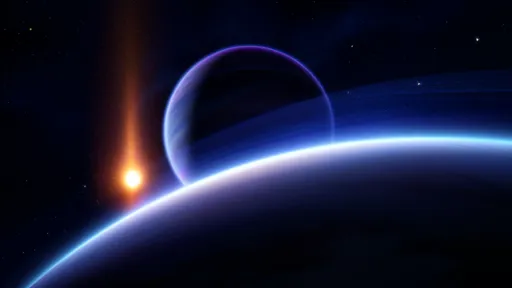
The frontier of this research has been revolutionized by the ability to perform real-time spectral tracking of atmospheric escape. This technique moves beyond static snapshots or theoretical predictions, capturing the actual event as it happens. The principle hinges on a planet’s transit across the face of its star. As it does, the star's light filters through the planet's atmosphere, and atoms within that atmosphere imprint their unique spectral signatures on the light. When a planet is undergoing mass loss, it is often surrounded by an extended, comet-like halo of gas, primarily hydrogen and other light elements, being blown away by the stellar wind. This large cloud of gas absorbs even more light at specific wavelengths during transit.
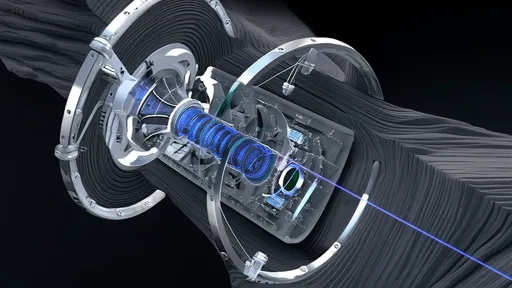
By employing high-resolution spectrographs on powerful telescopes like Hubble and, more recently, JWST, astronomers can dissect the starlight during these transits. They are not just looking for a dip in overall brightness, but for very specific, deep absorption lines in the spectrum that indicate the presence of these escaping atoms far beyond the planet's solid body. The true power of real-time tracking is revealed by monitoring how these spectral lines change shape, depth, and Doppler shift throughout the transit. This data paints a vivid picture of the velocity, density, temperature, and composition of the escaping wind, effectively allowing scientists to watch the atmospheric stripping process unfold over hours.
The role of the stellar wind in this drama cannot be overstated. It is the primary antagonist. This relentless stream of charged particles—protons, electrons, and alpha particles—emanates from the star at speeds of hundreds of kilometers per second. For a planet with a weak magnetic field or none at all, this wind slams directly into the upper atmosphere, transferring immense energy. This energy heats the atmospheric particles, allowing them to achieve escape velocity and flee the planet's gravity. In more extreme cases, the magnetic field carried by the stellar wind can directly interact with and peel away layers of the atmosphere, a process known as sputtering. The efficiency of this stripping is a complex tug-of-war between the stellar wind's pressure and the planet's gravitational and magnetic defenses.
Recent observations have provided stunning validation of these models. One of the most studied subjects is the hot Jupiter KELT-9b, a planet so intensely irradiated by its host star that its dayside temperature exceeds 4,000 degrees Celsius. Spectroscopic observations have revealed that the planet is trailing a massive tail of escaping hydrogen and heavy metals like iron and magnesium, vaporized and swept away by the stellar wind. The data shows the gas flowing at tremendous speeds, providing a direct measurement of the catastrophic mass loss the planet is enduring. It is a stark reminder that not all planets have stable, permanent atmospheres; some are actively evaporating before our eyes.
The implications of these findings are profound, particularly for the quest for habitable worlds. A planet might reside snugly within the traditional habitable zone—where temperatures could allow for liquid water—but if its host star is young and magnetically active, with a fierce stellar wind, the planet's atmosphere could be stripped away long before life ever has a chance to emerge. This reframes the concept of habitability, forcing astrobiologists to consider not just a planet's location and size, but also the space weather environment created by its star and the planet's own ability to shield itself. A strong magnetic field, like Earth's, may be a prerequisite for long-term atmospheric retention and thus, life as we know it.
Looking ahead, the future of this field is exceptionally bright. New generations of telescopes and advanced spectrographs are coming online, promising even more detailed and frequent observations. The goal is to move beyond hot Jupiters and begin scrutinizing the atmospheres of smaller, rocky exoplanets, often called super-Earths or mini-Neptunes. Do these worlds, under the assault of their red dwarf stars, possess vast, escaping hydrogen envelopes? Or have they already been stripped down to barren cores? Real-time spectral tracking will be the key tool to answer these questions. It will allow us to create a classification of atmospheric vulnerability and understand the full life cycle of a planet's atmosphere, from its formation to its potential destruction.
In essence, the ability to spectroscopically track atmospheric escape in real-time has transformed a theoretical concept into an observable, dynamic celestial event. We are no longer simply inferring that atmospheres escape; we are watching them do it. We are measuring the stellar wind's force and the planet's losing battle against it. This new window into the interplay between stars and their planets provides a crucial piece of the puzzle in our understanding of planetary evolution and the cosmic prospects for life. It reveals a universe that is not static, but violently active, where the conditions for life are won and lost in the ongoing struggle between a planet's gravity and its star's relentless wind.
By /Aug 25, 2025
By /Aug 25, 2025
By /Aug 25, 2025
By /Aug 25, 2025
By /Aug 25, 2025

By /Aug 25, 2025
By /Aug 25, 2025
By /Aug 25, 2025
By /Aug 25, 2025

By /Aug 25, 2025

By /Aug 5, 2025

By /Aug 5, 2025

By /Aug 5, 2025

By /Aug 5, 2025

By /Aug 5, 2025
By /Aug 5, 2025

By /Aug 5, 2025

By /Aug 5, 2025

By /Aug 5, 2025
By /Aug 5, 2025